

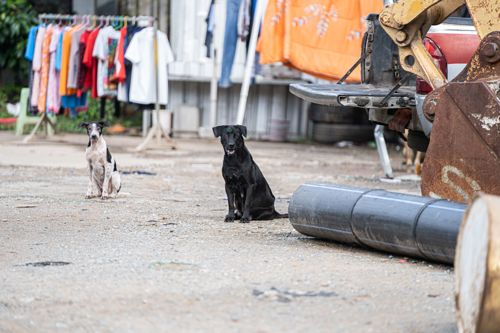
An estimated five million dogs live in Cambodia, the majority of which are free-roaming. Free-roaming dogs encompass owned dogs that are allowed to roam freely, which is the case for most owned dogs, community dogs that are not formally owned, and stray dogs that are unowned. Many suffer from untreated injuries, disease and parasites, while rabies remains widespread. Limited access to qualified veterinary care means that both acute treatment and preventive efforts are often lacking. At the same time, there is a shortage of practical veterinary expertise, as many newly trained veterinarians have limited experience with surgery, neutering and the treatment of free-roaming animals. This hinders sustainable and preventive management of the dog population.
Worldwide Veterinary Service (WVS) is working to address this need through the establishment of a new veterinary training centre in Cambodia’s capital, Phnom Penh. The centre will serve as a hub for practical training and treatment, where free-roaming dogs receive free veterinary care while veterinary students gain essential experience in surgery, neutering and disease management.
The centre is run in collaboration with the Royal University of Agriculture and builds on WVS’s many years of experience operating similar training centres in other countries. Each year, up to 300 veterinary students are expected to receive targeted training, while thousands of dogs gain access to treatment that would otherwise not be available.
With support from the QATO Foundation, WVS can secure the necessary operation of the centre during its first year. The funding helps ensure that the centre is staffed with suitably qualified professionals, equipped for surgical procedures, and able to operate as a stable service for both animals and students from the outset.
In the longer term, the initiative is expected to deliver lasting improvements for dogs in Cambodia. By strengthening the skills of local veterinarians and combining treatment with education, the project supports a more sustainable, welfare-led approach to managing the free-roaming dog population. In this way, animal welfare is improved not only in the short term, but also for future generations of dogs, with positive knock-on effects for local communities and public health.
"One of the biggest gaps in veterinary education in Cambodia has been access to practical, hands-on training - particularly when it comes to dogs. By establishing the country’s first International Training Centre, we are able to combine high-quality treatment for free-roaming animals with supervised, real-world training for veterinary professionals. This approach improves welfare immediately, while at the same time equipping a new generation of veterinarians with the skills, confidence and standards needed to work preventively and responsibly in the long term. That combination is essential if we are to deliver lasting, system-level change for animal welfare in Cambodia,” says Dr. Luke Gamble, Founder and Chief Executive of Worldwide Veterinary Service (WVS).
Worldwide Veterinary Service is a British charitable organisation founded in 2003. The organisation works internationally to improve animal welfare through veterinary treatment, the training of veterinarians, and the provision of medicines and equipment to areas with limited access to veterinary care. WVS runs projects in a wide range of countries, with a focus on elevating global animal welfare by caring for animals who have no one else to turn to and capacity-building within the veterinary profession.
Explore more cases in the Annual Report 2025


